
Automotive OEMs
Scale Your IE Team's Impact Across Every Line, Every Shift
Invisible AI captures cycle-level data across every station so IEs can find improvements, validate changes, and scale what works — with proactive insights that surface quality risks, process drift, and ergonomic issues before they compound. OEMs get more consistent quality, safer work, and higher throughput from the team they already have.
Request Demo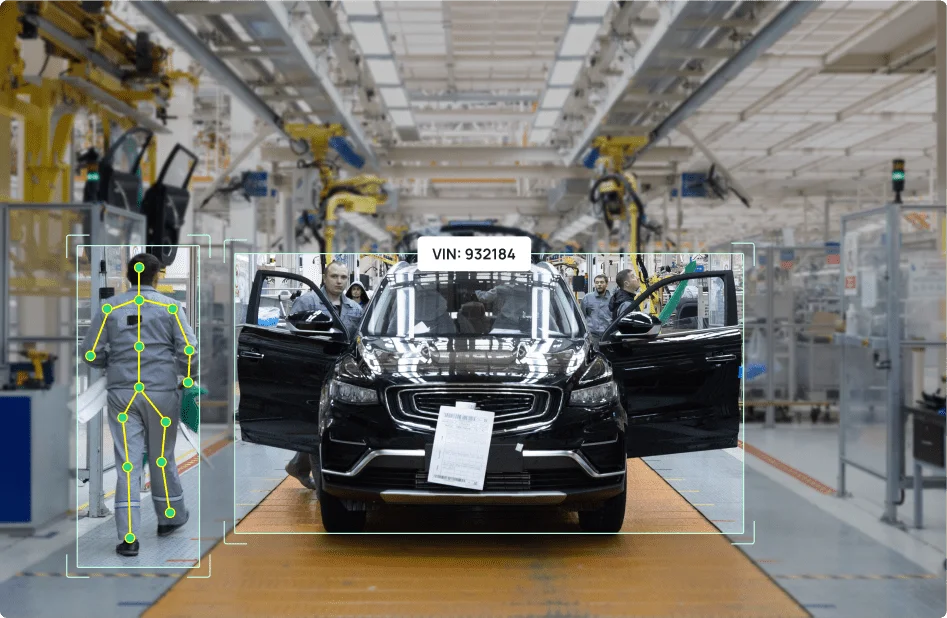




Why Engineers Are Stretched Thin
Your IEs and team leads are responsible for quality, throughput, and safety across every line and shift — but traditional tools only give them snapshots of what's actually happening.

Quality Issues Compound
Process deviations go undetected until they surface as rework, warranty claims, or field failures — because manual audits only cover a fraction of what’s happening.

Process Drift Goes Unseen
Small changes in cycle time, work sequence, and material flow erode throughput quietly — and IEs can’t address what they can’t see across every station and shift.

Ergonomic Risks Build Silently
Subtle shifts in posture, reach, and repetition accumulate over thousands of cycles — but periodic assessments only capture a handful of snapshots per quarter.
Continuous Visibility for Every Line
Give your industrial engineers always-on, cycle-level data across every station — replacing periodic sampling with continuous insight.
Standardized Work Monitoring
Even well-defined assembly processes drift over time. Small changes go unnoticed, leading to inconsistent quality and hidden variation — but manual audits only cover a fraction of what’s happening. IEs need continuous visibility to keep standard work on track across every line and shift.
Before Invisible AI:
Manufacturers could only sample adherence a few times per quarter. Quality engineers relied on manual audits or video reviews that caught just a fraction of the total production time.
After Invisible AI:
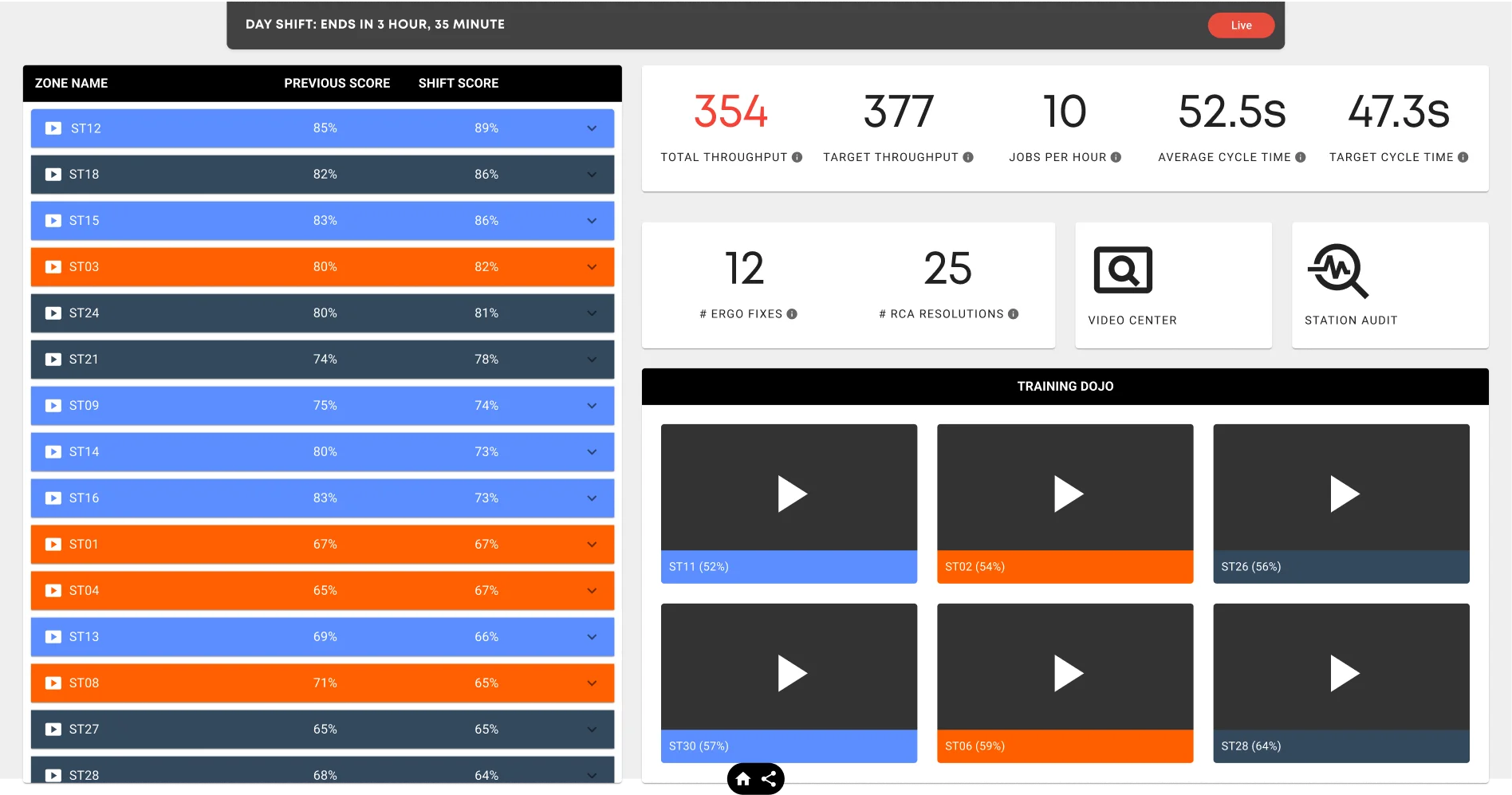
Every cycle at every station is automatically analyzed in real time. The system continuously compares actual work to the digital standard, surfacing deviations and pushing alerts to IEs and team leads — so they can address drift before it compounds.
Results:
A living view of standard work across every line and shift — with proactive alerts that surface where execution is drifting, so engineers can prioritize what to address first.
Root Cause Analysis
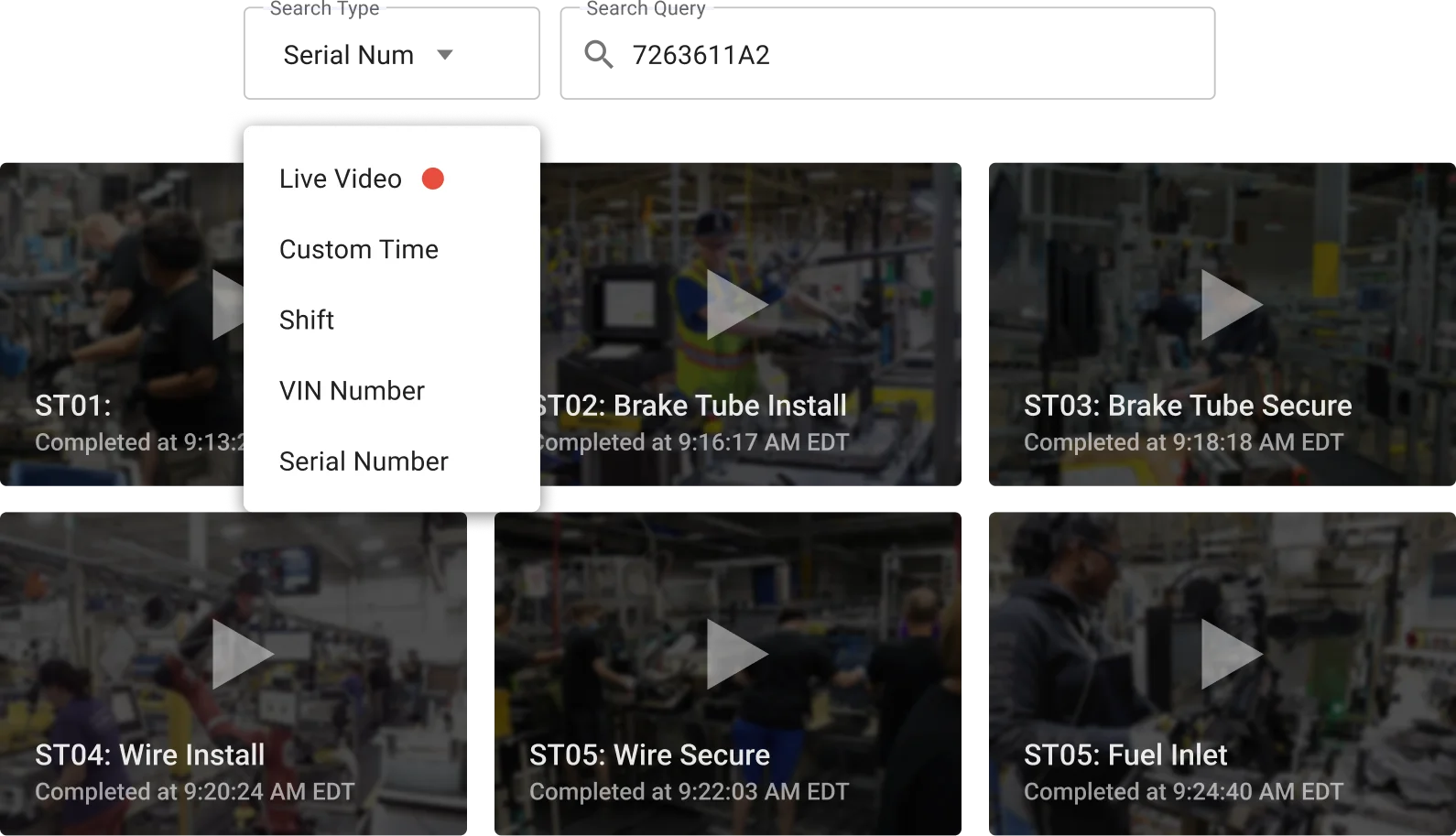
When a defect appears, finding the moment it originated is slow and subjective. Teams spend days debating where it happened and why. Without clear evidence, the response is often to over-correct — implementing multiple countermeasures that may not address the true root cause.
Before Invisible AI:
Teams guessed the point of occurrence, often using indirect data or limited footage. Root cause investigations dragged on and eroded confidence.
After Invisible AI:
Instantly locate the exact video of the event. See exactly what happened and when — giving teams the evidence to fix processes, not assign blame. Root cause becomes a fact-finding exercise, not a finger-pointing one.
Results:
Faster, data-driven countermeasures that address the true cause the first time — whether it’s a training gap, a tooling problem, a parts issue, or a process design flaw.
Ergonomics Monitoring
Musculoskeletal disorders (MSDs) remain one of the top causes of lost time in automotive assembly. Many injuries stem from subtle posture and motion risks that build over thousands of repetitions — but periodic assessments only capture a handful of snapshots.
Before Invisible AI:
Ergonomics reviews were periodic — a sample of a few operators once a quarter, missing thousands of daily repetitions.
After Invisible AI:
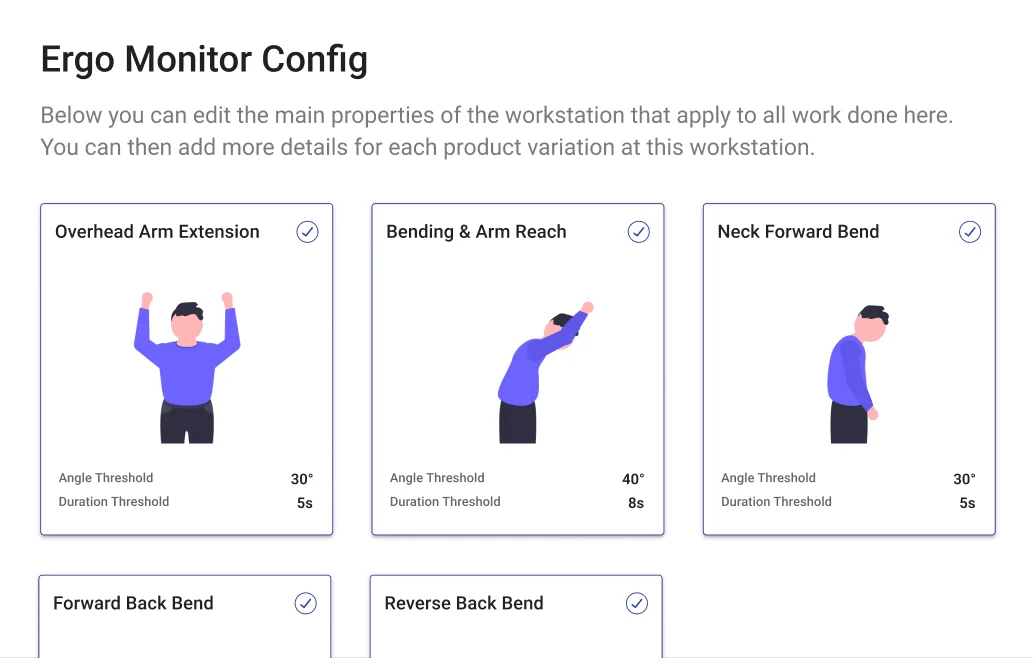
Every station is continuously assessed for ergonomic risk. The system automatically identifies motions that could lead to strain or injury, pushing alerts to safety teams and team leads so they can act before injuries happen.
Results:
Safer, more sustainable work for every operator — with objective, station-level ergonomic data that gives safety teams and union committees evidence to advocate for workstation improvements.
Productivity – Hidden Process Change
Small, undocumented changes — tool placement, material flow, work sequence — silently reduce efficiency. Cycle times creep up, walk distances increase, and lines miss their JPH targets. But IEs can’t address drift they can’t see — and manual time studies only capture a snapshot.
Before Invisible AI:
Industrial engineers had to manually time processes or interview operators, catching only a snapshot of what actually happens.
After Invisible AI:
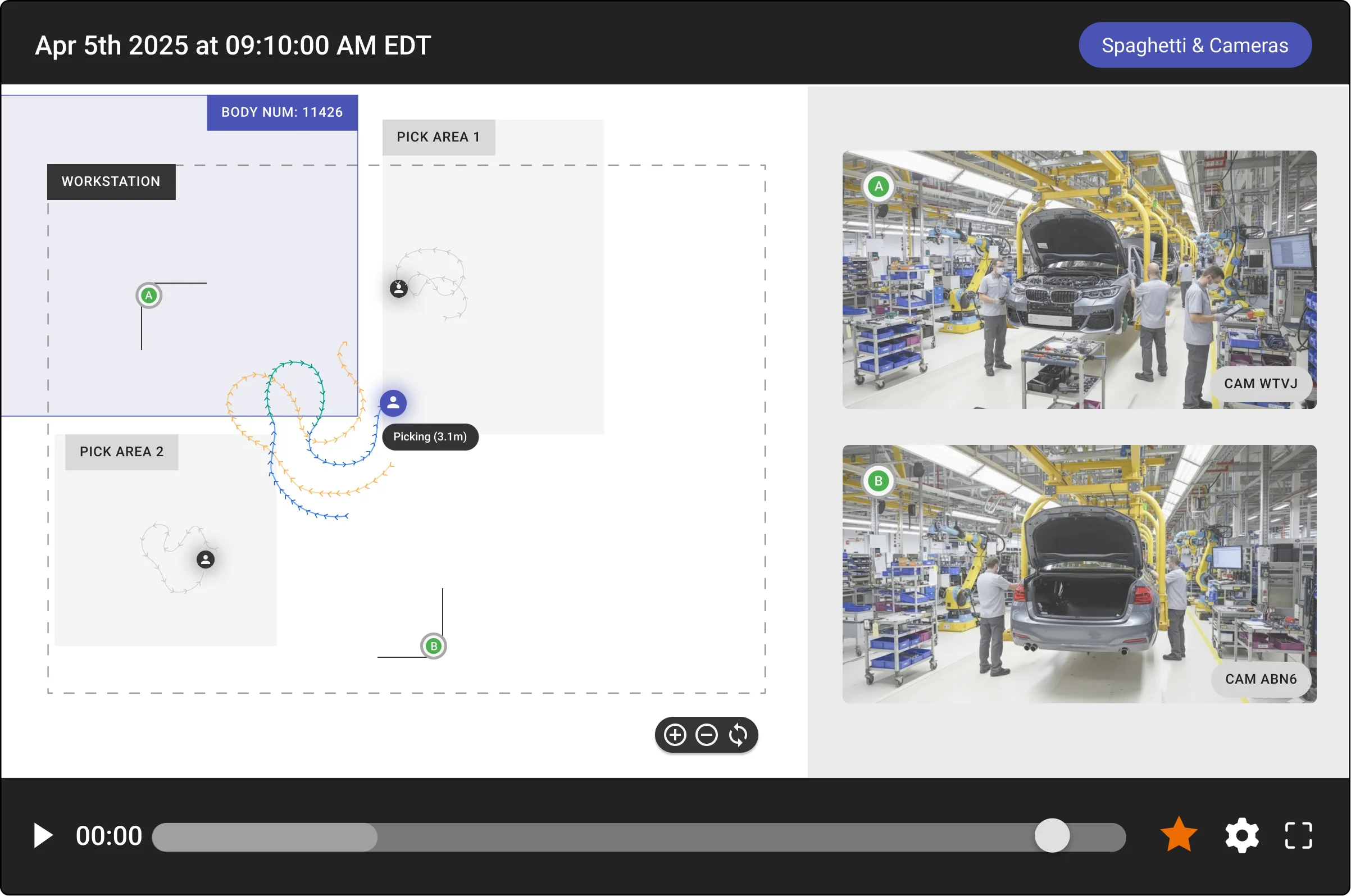
Cycle time, walk distance, and work sequence are visible in real time for every station. The system proactively surfaces when drift is occurring and pushes improvement opportunities to IEs and team leads.
Results:
IEs can validate that improvements hold across all shifts and conditions — and spot early when cycle times creep, before operators compensate with rushed movements or awkward postures that create ergonomic risk.
Real-Time Quality Anomaly Detection
When a task is performed in a way that’s significantly different from the standard method, it often signals the start of a defect — but traditional systems don’t detect it until it’s too late. Every unnoticed process deviation risks downstream quality issues, rework, warranty claims, and recalls.
Before Invisible AI:
Quality teams were completely reactive, relying on final inspection or field failures to reveal a problem after parts had already left the line.
After Invisible AI:
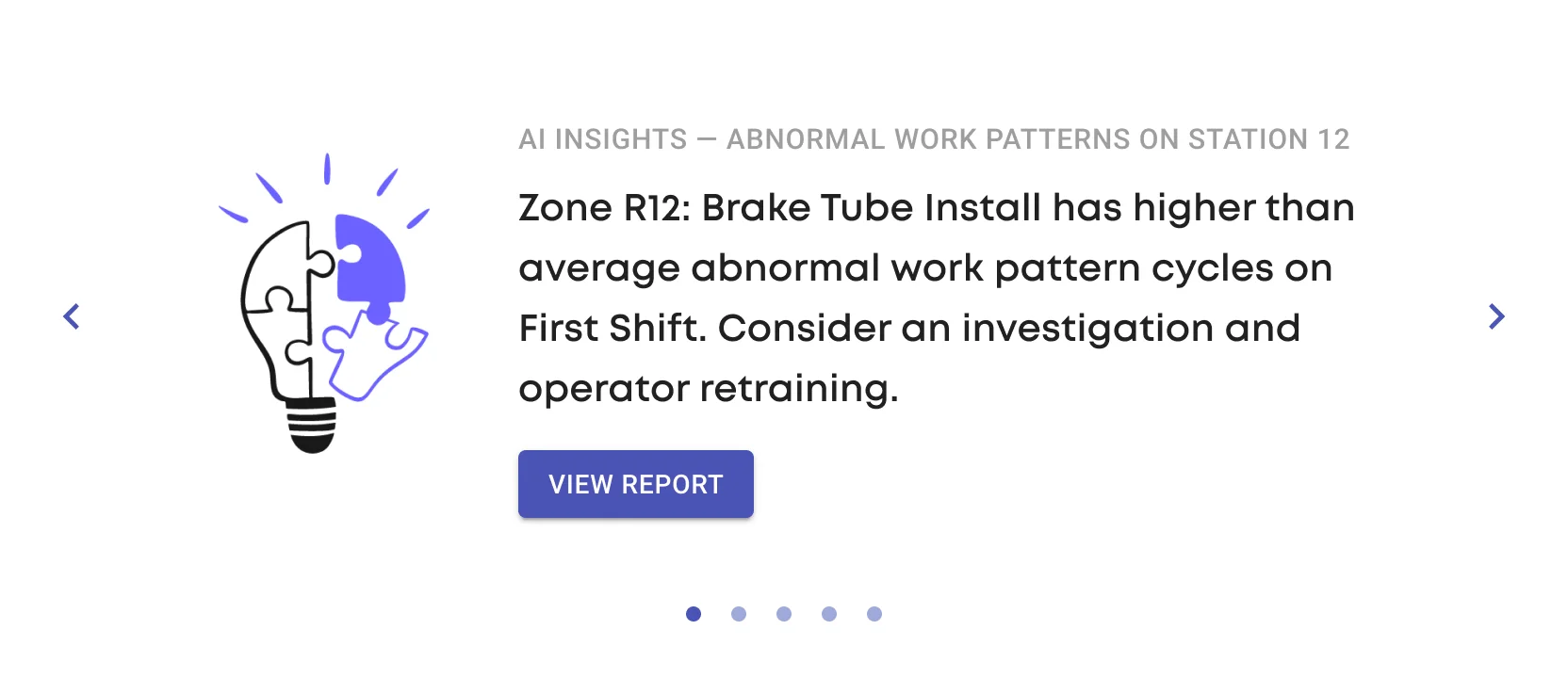
Invisible AI continuously analyzes every station for process deviations and alerts quality teams and team leads the moment something looks off — identifying deviations at the station before they become escapes.
Results:
Process deviations are identified at the source — reducing scrap, warranty cost, and rework while improving first-pass yield. When issues do surface, teams trace them to the exact cycle with video context, replacing guesswork with facts.
Contact Us
See What Your Engineers Could Do With Continuous Visibility
Top automotive manufacturers use Invisible AI to scale their industrial engineer's impact across every line and shift — improving FPY, OEE, and workforce safety with proactive, data-driven insights.
Request Demo